
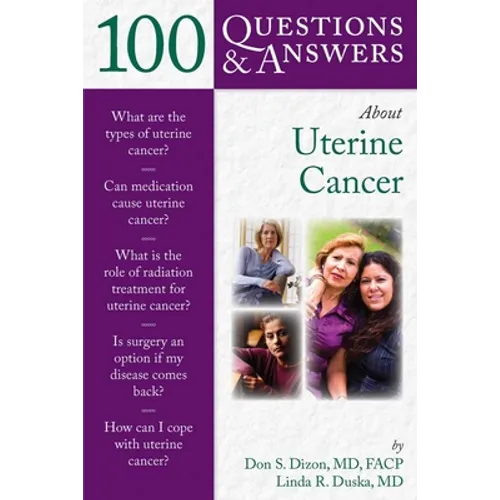
100 Questions and Answers About Uterine Cancer, Dizon and Duska
Description
A question and answer guide to uterine cancer written by Don S. Dizon and Linda R. Duska, both gynecologic oncologists, with commentary from a patient throughout.
The book is organized as 100 questions, covering symptoms and the diagnosis process, treatment options, quality of life after treatment, coping, and where to find support for patients and families. The format means you can look up a single question without reading the book front to back.
Paperback, 134 pages, 5.9 by 8.8 inches. Published March 2010.
Medical guidance changes over time. Your care team has the most current information for your situation.
Why It Matters
A reference organized by question helps with exactly that. You can look up the one thing you need without reading a whole book, and you can hand it to a family member who wants to understand what is happening without asking you to explain it again.
Books like this are a starting point rather than an authority. Medical guidance changes, and the people treating you know your specific situation. What a good reference gives you is enough footing to ask better questions at your next appointment.
A question and answer guide to uterine cancer written by Don S. Dizon and Linda R. Duska, both gynecologic oncologists, with commentary from a patient throughout.
The book is organized as 100 questions, covering symptoms and the diagnosis process, treatment options, quality of life after treatment, coping, and where to find support for patients and families. The format means you can look up a single question without reading the book front to back.
Paperback, 134 pages, 5.9 by 8.8 inches. Published March 2010.
Medical guidance changes over time. Your care team has the most current information for your situation.
Blog posts

Easy Foods for Cancer Patients When Nausea Comes and Goes
You might crave toast at 10 a.m., then feel queasy looking at it an hour later. Here are gentle, flexible ways to eat and drink when nausea comes and goes.

Why Am I So Tired After Cancer Treatment? Fatigue and Joint Pain
You finish treatment and expect energy to return. Instead your body feels heavy and your joints ache. Cancer-related fatigue often lingers well beyond the last appointment, and it does not mean you are doing something wrong.
The Power of Small: Micro-Habits That Make Days Easier
During treatment, advice comes from every direction. Here are small habits that fit the day you are actually living, without turning care into a project.


