
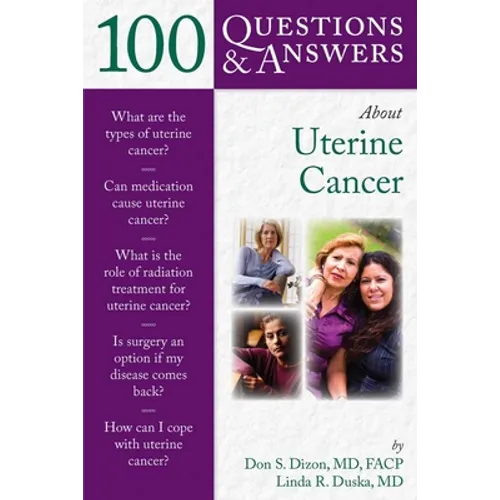
100 Questions and Answers About Uterine Cancer, Dizon and Duska
Description
A question and answer guide to uterine cancer written by Don S. Dizon and Linda R. Duska, both gynecologic oncologists, with commentary from a patient throughout.
The book is organized as 100 questions, covering symptoms and the diagnosis process, treatment options, quality of life after treatment, coping, and where to find support for patients and families. The format means you can look up a single question without reading the book front to back.
Paperback, 134 pages, 5.9 by 8.8 inches. Published March 2010.
Medical guidance changes over time. Your care team has the most current information for your situation.
Why It Matters
A reference organized by question helps with exactly that. You can look up the one thing you need without reading a whole book, and you can hand it to a family member who wants to understand what is happening without asking you to explain it again.
Books like this are a starting point rather than an authority. Medical guidance changes, and the people treating you know your specific situation. What a good reference gives you is enough footing to ask better questions at your next appointment.
A question and answer guide to uterine cancer written by Don S. Dizon and Linda R. Duska, both gynecologic oncologists, with commentary from a patient throughout.
The book is organized as 100 questions, covering symptoms and the diagnosis process, treatment options, quality of life after treatment, coping, and where to find support for patients and families. The format means you can look up a single question without reading the book front to back.
Paperback, 134 pages, 5.9 by 8.8 inches. Published March 2010.
Medical guidance changes over time. Your care team has the most current information for your situation.
Blog posts

Skin Changes During Cancer Treatment and How to Care for Them
The lotion or soap you have used for a decade starts to sting. Fragrance you never noticed becomes intolerable. Skin changes are one of the most visible parts of treatment and one of the least prepared for, and small adjustments often help more than expensive ones.

Intimacy During and After Cancer Treatment
Patients consistently say they want information about sexuality, and consistently report not getting it. Treatment can change desire, comfort, and how you feel in your own body, and the silence around it leaves a lot of people assuming they are the only one.

Living With the What If: Fear After a Cancer Diagnosis
Fear does not end when treatment does. Fear of recurrence is the most commonly reported unmet need in study after study, and almost nobody prepares you for the fact that the worrying gets louder once the appointments stop.


