
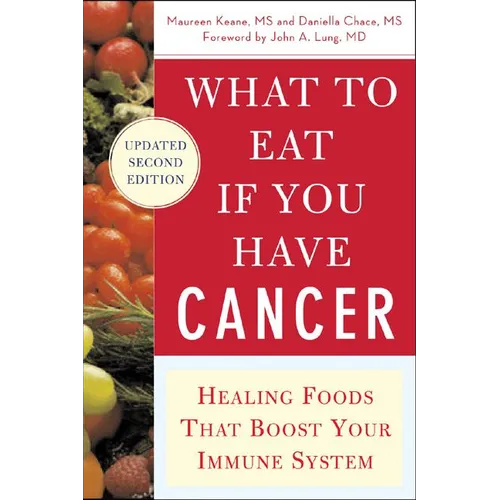
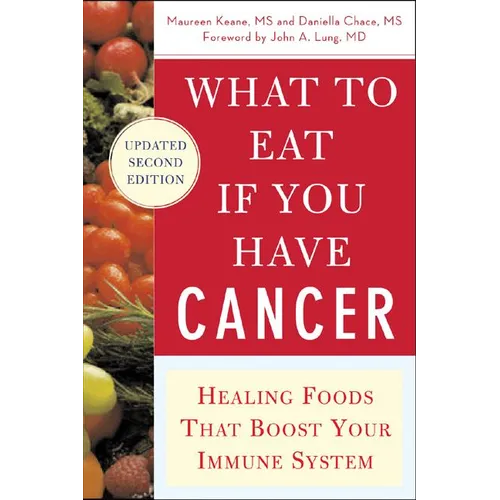
What to Eat If You Have Cancer (Revised), Keane and Chace, Paperback
Description
A 336 page paperback guide to eating during cancer treatment, written by Maureen Keane and Daniella Chace, both certified nutritionists holding master's degrees. Keane is also a cancer survivor.
The revised edition covers which foods to prioritize and which to approach with caution, how supplements fit into nutrition during treatment, and how to build meal plans suited to different treatments and stages. It includes recipes and menus.
Paperback, 6.04 by 8.96 inches, 0.89 inches thick. Published in its revised edition in October 2006.
Nutrition guidance changes over time, and some supplements can interact with chemotherapy and radiation. Talk with your care team or a registered dietitian before making changes, particularly around supplements.
Why It Matters
Taste can shift so that things you have liked your whole life turn metallic or flat. Appetite may disappear for days and then arrive at an inconvenient hour. Nausea makes planning difficult, and mouth sores or dry mouth can rule out foods that used to be easy.
At the same time, food becomes one of the most talked-about parts of a diagnosis. Advice arrives from every direction, most of it well meant, much of it contradictory, and sorting it out takes energy already in short supply. Reliable nutrition information helps on both counts: eating well supports strength and recovery through a demanding stretch, and having something steady to refer to quiets the noise.
Guidance also changes over time, and some foods and supplements can interact with treatment. A registered dietitian who knows your specific plan is the best companion to anything you read.
A 336 page paperback guide to eating during cancer treatment, written by Maureen Keane and Daniella Chace, both certified nutritionists holding master's degrees. Keane is also a cancer survivor.
The revised edition covers which foods to prioritize and which to approach with caution, how supplements fit into nutrition during treatment, and how to build meal plans suited to different treatments and stages. It includes recipes and menus.
Paperback, 6.04 by 8.96 inches, 0.89 inches thick. Published in its revised edition in October 2006.
Nutrition guidance changes over time, and some supplements can interact with chemotherapy and radiation. Talk with your care team or a registered dietitian before making changes, particularly around supplements.
Blog posts

Intimacy During and After Cancer Treatment
Patients consistently say they want information about sexuality, and consistently report not getting it. Treatment can change desire, comfort, and how you feel in your own body, and the silence around it leaves a lot of people assuming they are the only one.

Living With the What If: Fear After a Cancer Diagnosis
Fear does not end when treatment does. Fear of recurrence is the most commonly reported unmet need in study after study, and almost nobody prepares you for the fact that the worrying gets louder once the appointments stop.

Sleep Problems After Cancer Treatment: Evening Rituals That Help
You can be exhausted all day and still feel wide awake the moment your head touches the pillow. That part can feel especially unfair. Rest does not have to be perfect to count, and winding down still has value on the nights sleep takes its time.


