



















BeWell Sherpa IV Zip Hoodie, Arm Zippers for PICC Line Access
Description
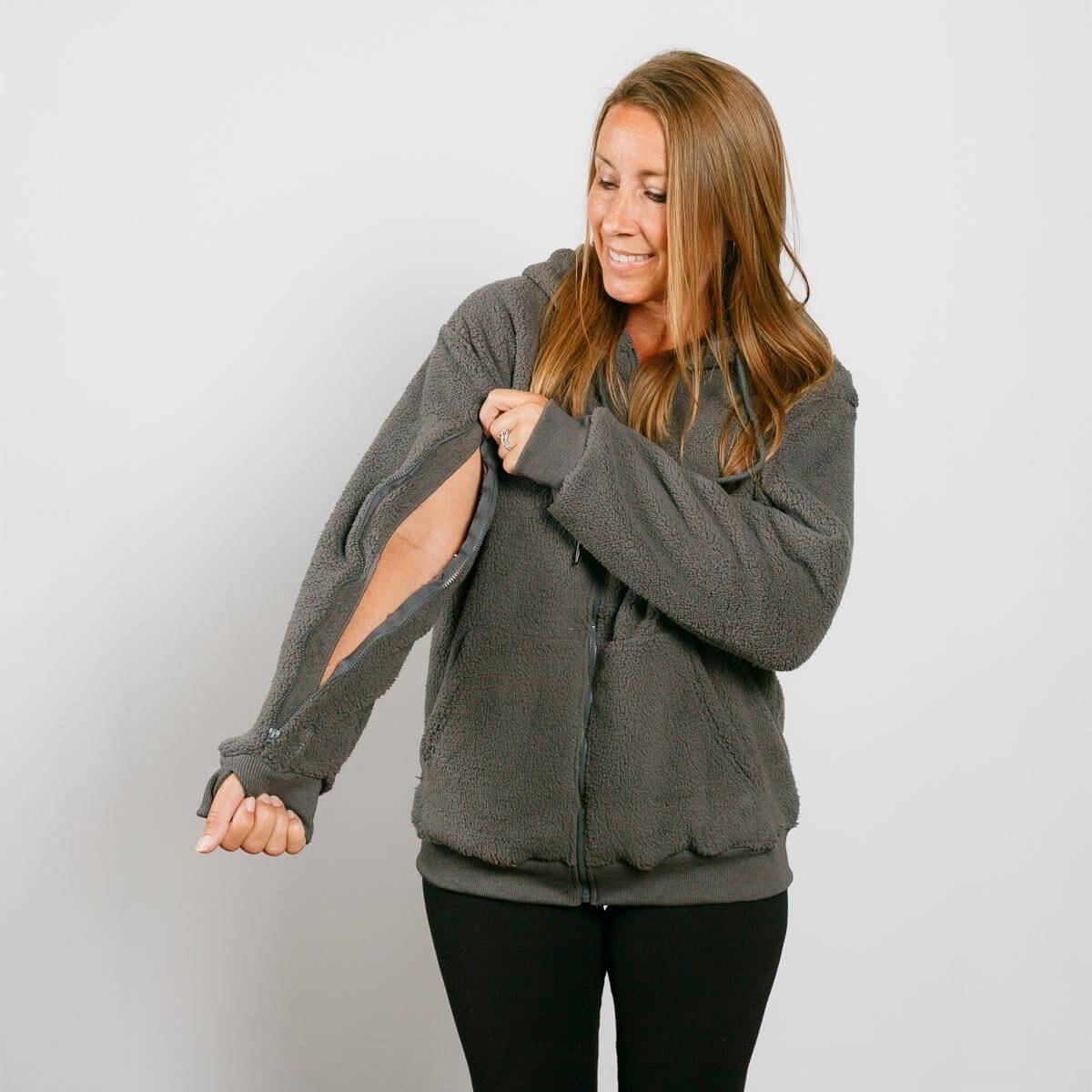
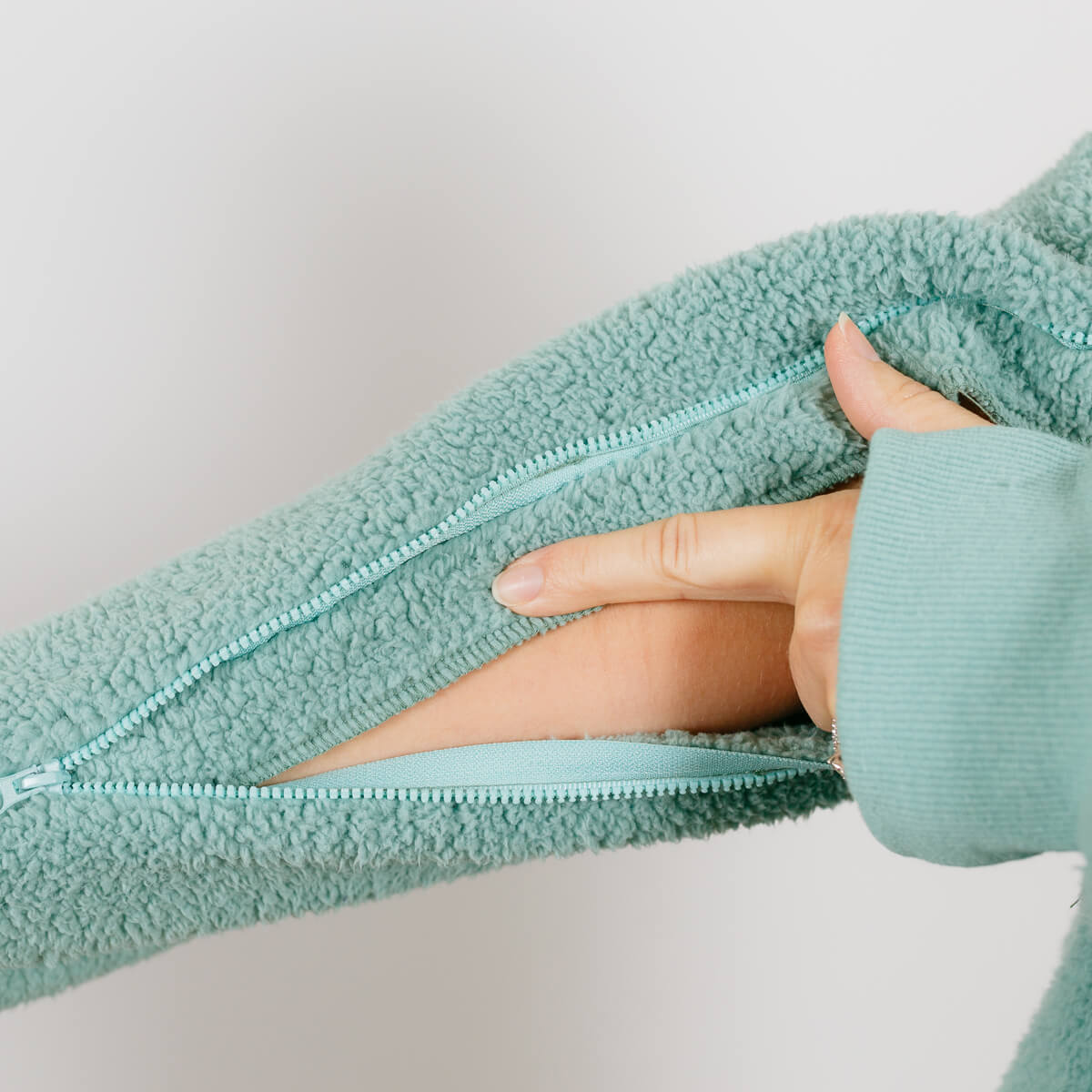
Hidden arm zippers for IV and PICC line access. Zippers run along the inner arm of both sleeves. Once the line is in, the sleeve closes back around the tubing, so your arm stays covered and warm while you're connected.
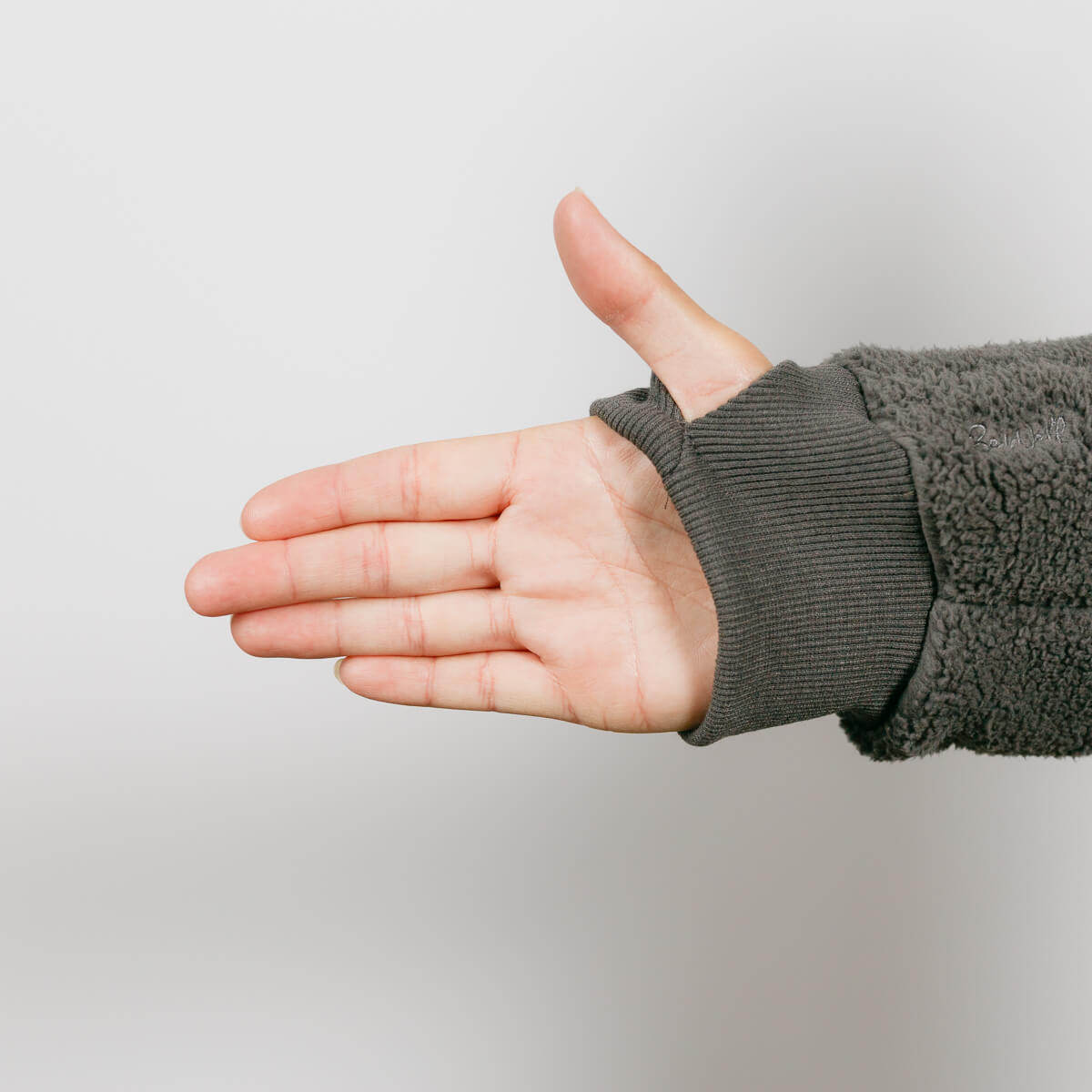
Sherpa inside and out. Warm enough for an infusion chair, and for anyone who runs cold the rest of the time. 100% polyester, with pockets.
Nothing visible from the outside. The zippers sit on the inner arm, so it reads as an ordinary sherpa hoodie. Wear it between treatment days too.
A zip-access hoodie gives you the warmth without the undressing. Access happens through the zipper, you stay covered — and between appointments, you're just a person in a comfortable hoodie.
Care. Machine wash cold on gentle with light colors. Non-chlorine bleach when needed. Tumble dry low and remove promptly. Iron low. Wash inside out.
Why It Matters
A zip-access hoodie offers warmth with thoughtful design, allowing medical access without needing to remove layers. It helps maintain comfort and a sense of normalcy, even in clinical settings.
Hidden arm zippers for IV and PICC line access. Zippers run along the inner arm of both sleeves. Once the line is in, the sleeve closes back around the tubing, so your arm stays covered and warm while you're connected.
Sherpa inside and out. Warm enough for an infusion chair, and for anyone who runs cold the rest of the time. 100% polyester, with pockets.
Nothing visible from the outside. The zippers sit on the inner arm, so it reads as an ordinary sherpa hoodie. Wear it between treatment days too.
A zip-access hoodie gives you the warmth without the undressing. Access happens through the zipper, you stay covered — and between appointments, you're just a person in a comfortable hoodie.
Care. Machine wash cold on gentle with light colors. Non-chlorine bleach when needed. Tumble dry low and remove promptly. Iron low. Wash inside out.
Blog posts

Intimacy During and After Cancer Treatment
Patients consistently say they want information about sexuality, and consistently report not getting it. Treatment can change desire, comfort, and how you feel in your own body, and the silence around it leaves a lot of people assuming they are the only one.

Living With the What If: Fear After a Cancer Diagnosis
Fear does not end when treatment does. Fear of recurrence is the most commonly reported unmet need in study after study, and almost nobody prepares you for the fact that the worrying gets louder once the appointments stop.

Sleep Problems After Cancer Treatment: Evening Rituals That Help
You can be exhausted all day and still feel wide awake the moment your head touches the pillow. That part can feel especially unfair. Rest does not have to be perfect to count, and winding down still has value on the nights sleep takes its time.


