


Comrad Knee-High Compression Socks, 15-20 mmHg, Nylon, Solid
Description
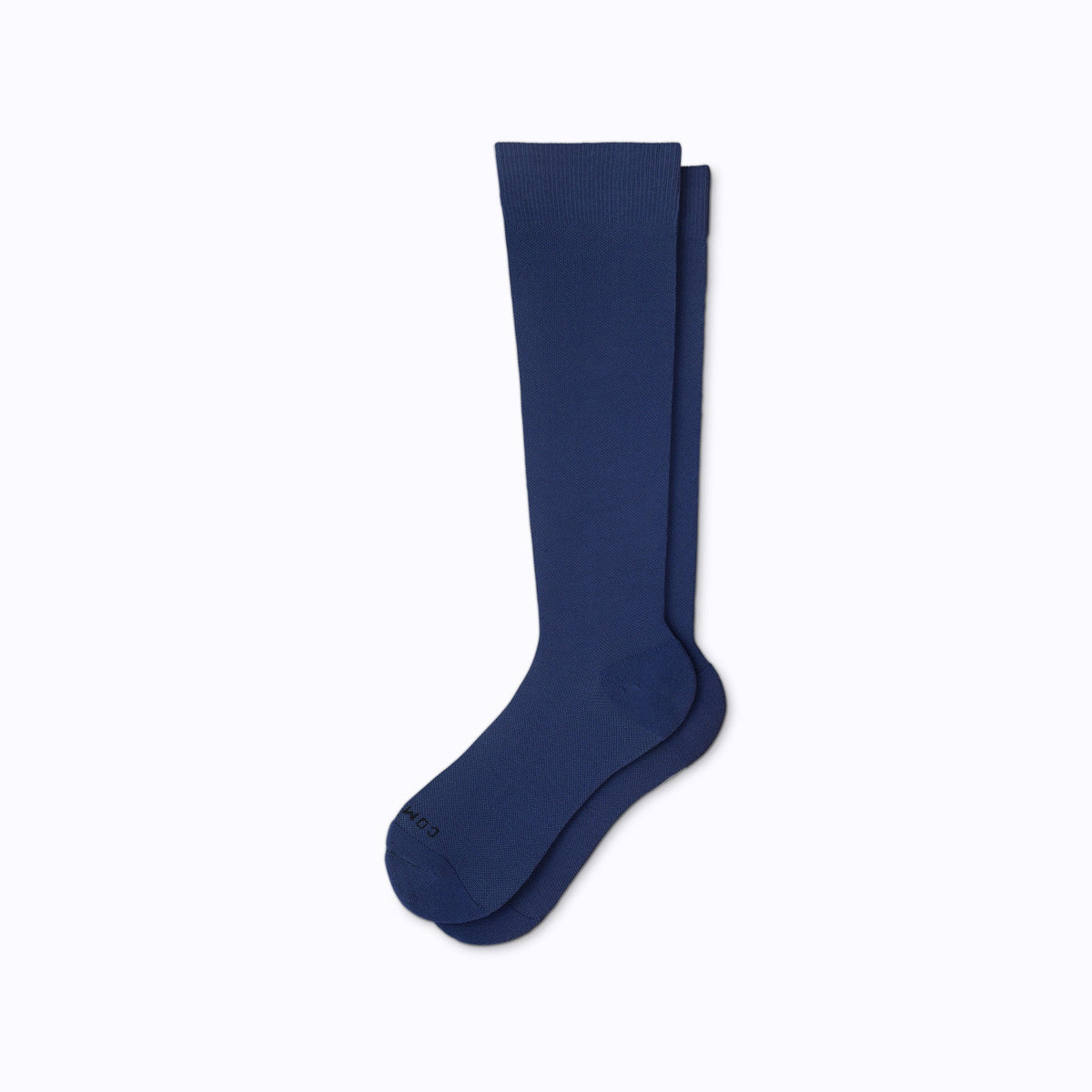
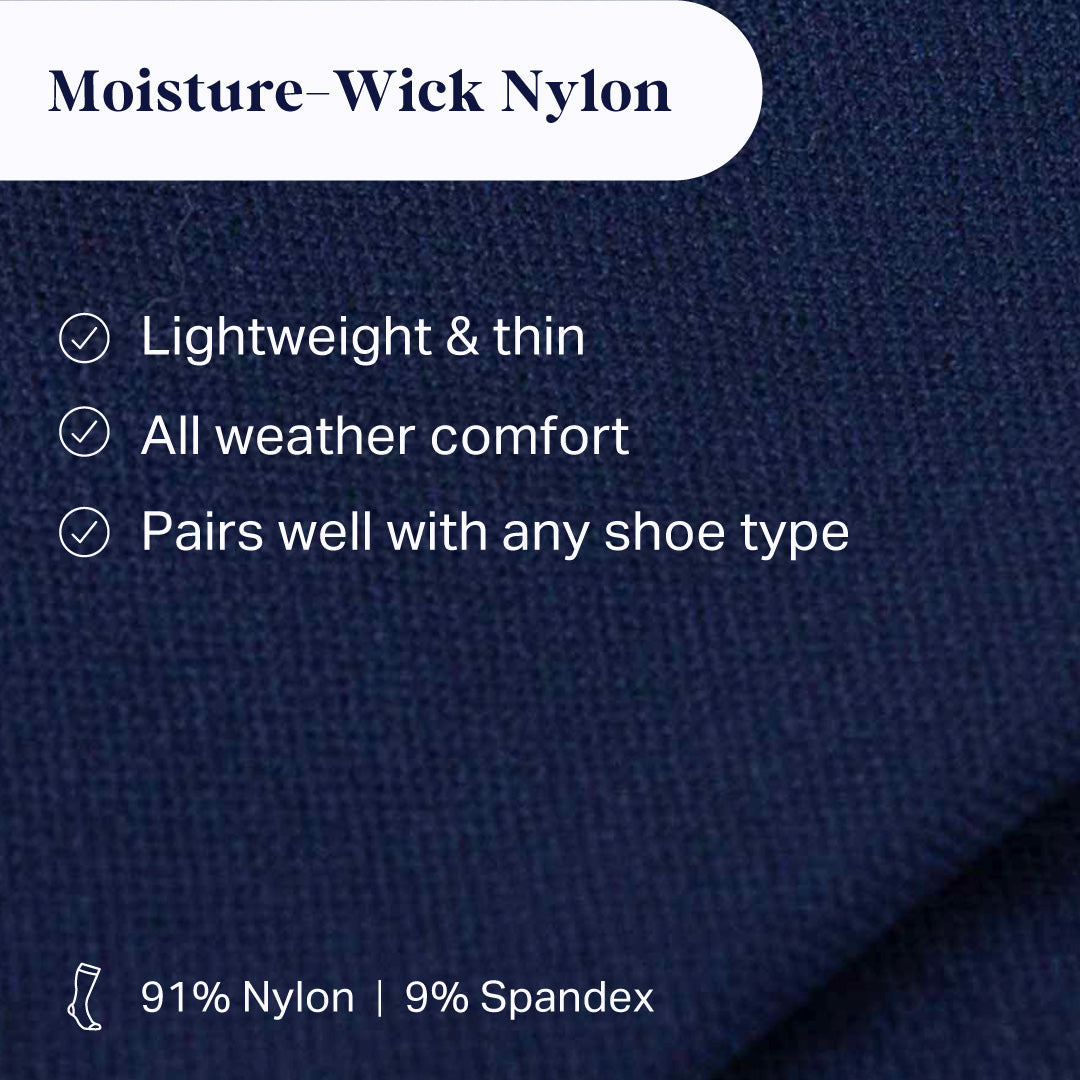
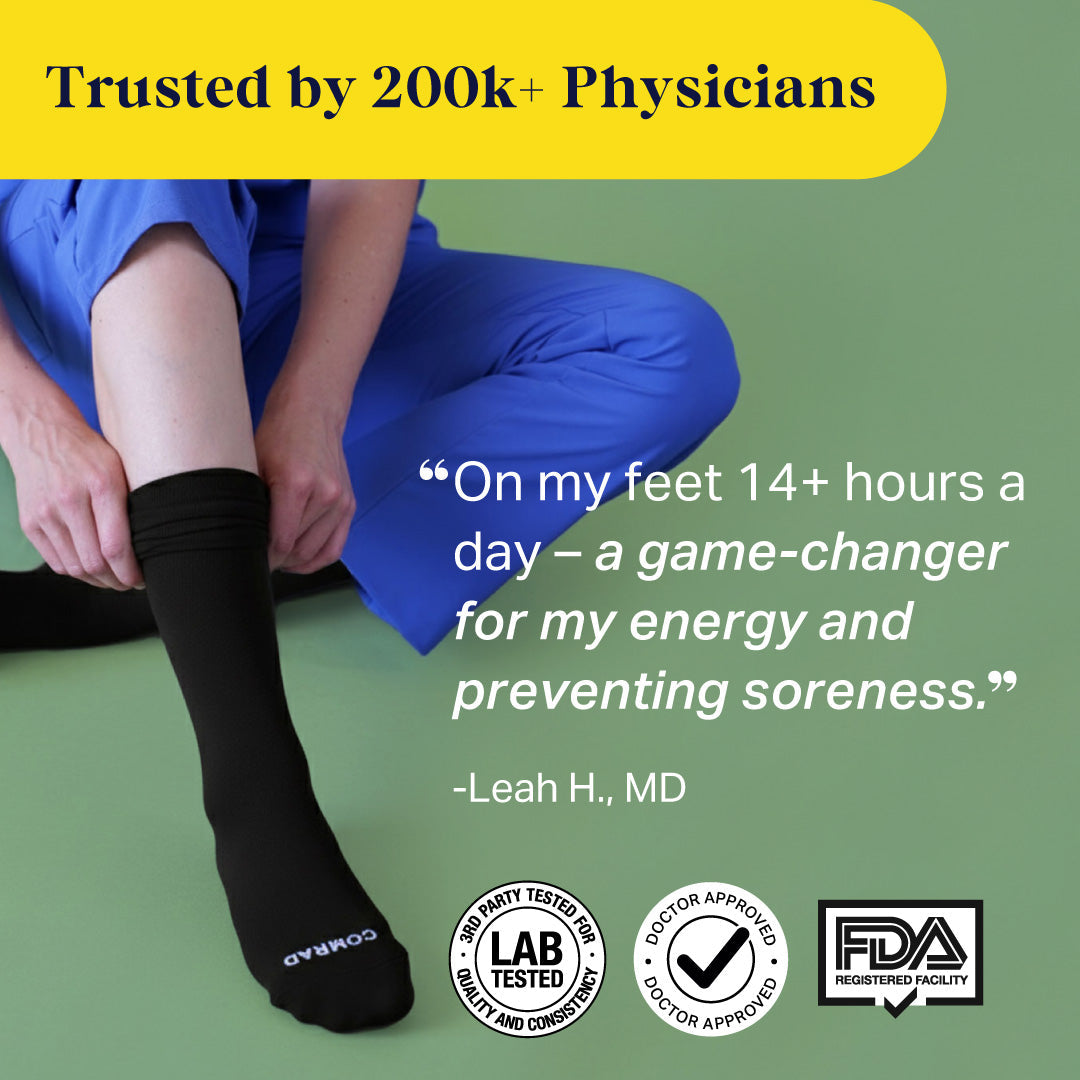
Knee high compression socks in Comrad's Companion style, in a solid color, made from moisture-wicking nylon.
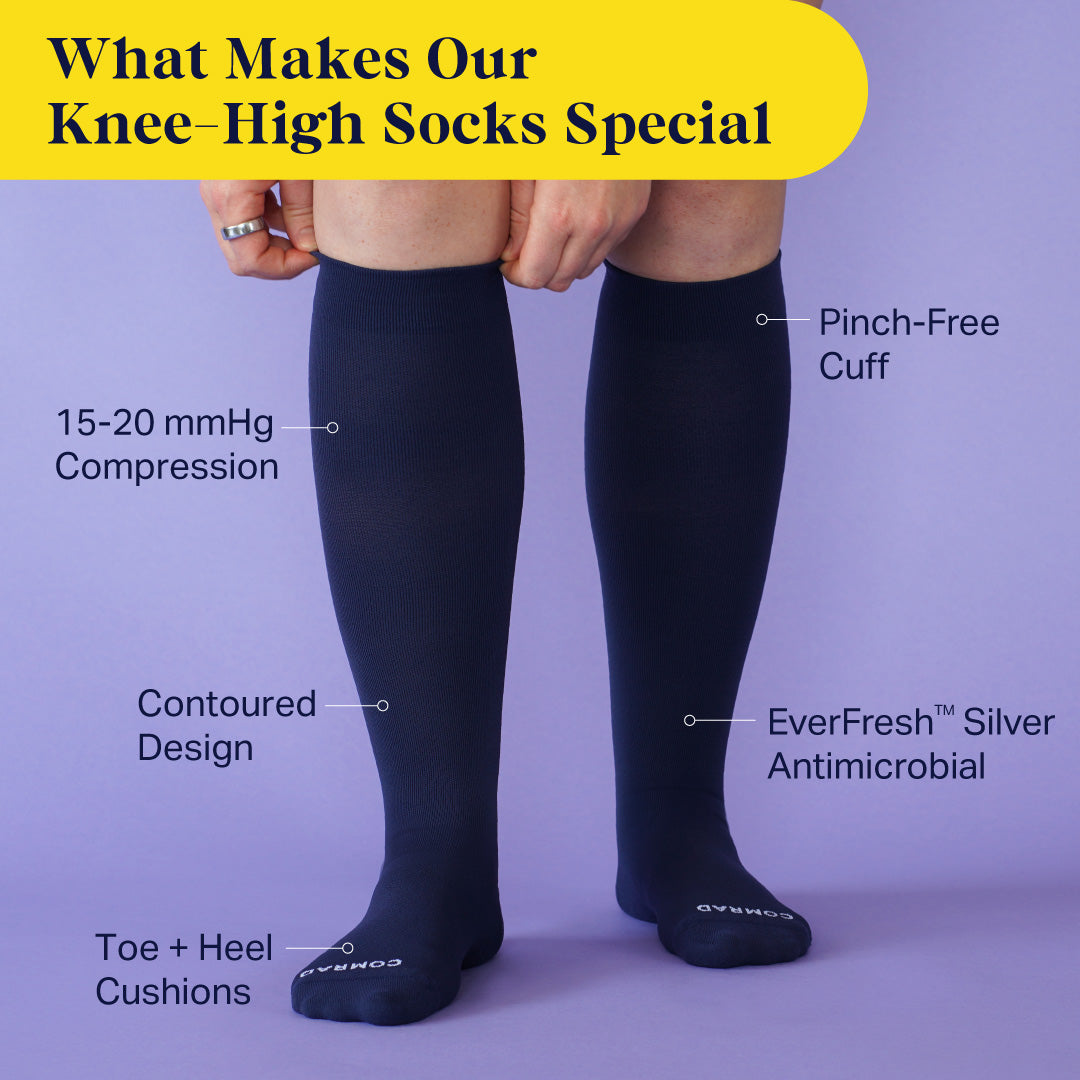
True graduated compression at 15-20 mmHg, Comrad's moderate level. The pressure is strongest at the ankle and eases as it moves up the leg to support circulation through the day.
Comrad's 15-20 mmHg knee-high compression socks were named Best Compression Socks by New York Times Wirecutter.
Why It Matters
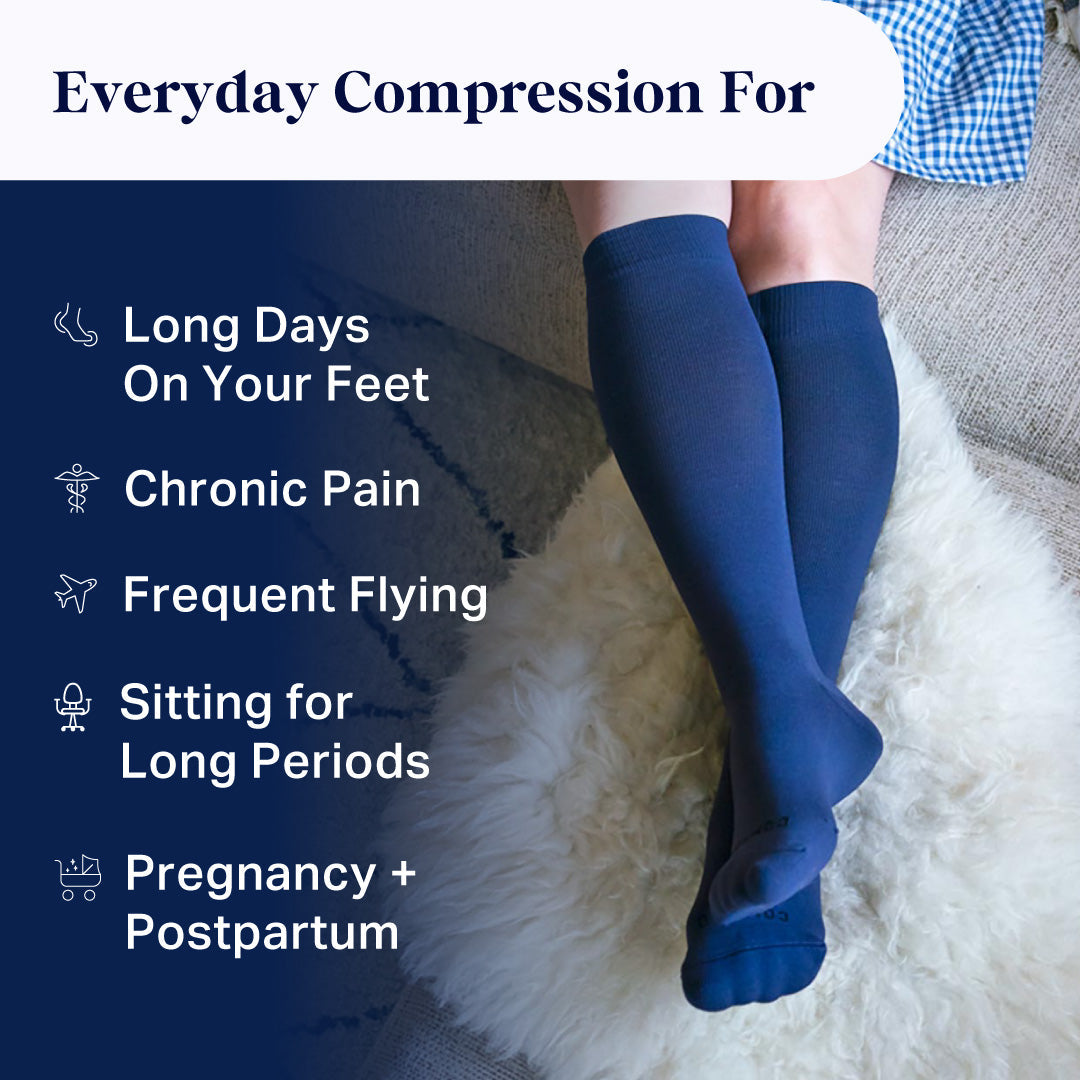
Legs and feet notice. Swelling, heaviness, and aching are common after hours without moving, and the drive or flight to a treatment center adds to it.
Graduated compression is designed for exactly that stretch of stillness. Which level suits you is worth a conversation with your care team, since the right one depends on what is causing the swelling.
Knee high compression socks in Comrad's Companion style, in a solid color, made from moisture-wicking nylon.
True graduated compression at 15-20 mmHg, Comrad's moderate level. The pressure is strongest at the ankle and eases as it moves up the leg to support circulation through the day.
Comrad's 15-20 mmHg knee-high compression socks were named Best Compression Socks by New York Times Wirecutter.
Blog posts

Mouth Sores and Taste Changes: Eating During Chemotherapy
Coffee tastes like pennies. Your favorite dinner tastes like nothing at all. Taste changes and mouth soreness are common, and both are worth mentioning.

Cancer and Work: What to Tell Your Employer and When
There is no rule that says you have to announce a diagnosis at work. What you share, and when, is far more up to you than most people realize it is.

Neuropathy From Chemo: Cold Sensitivity and What Helps
You reach into the freezer and your fingers feel like they are burning. Cold sensitivity is one of the stranger side effects, and it is common.


