
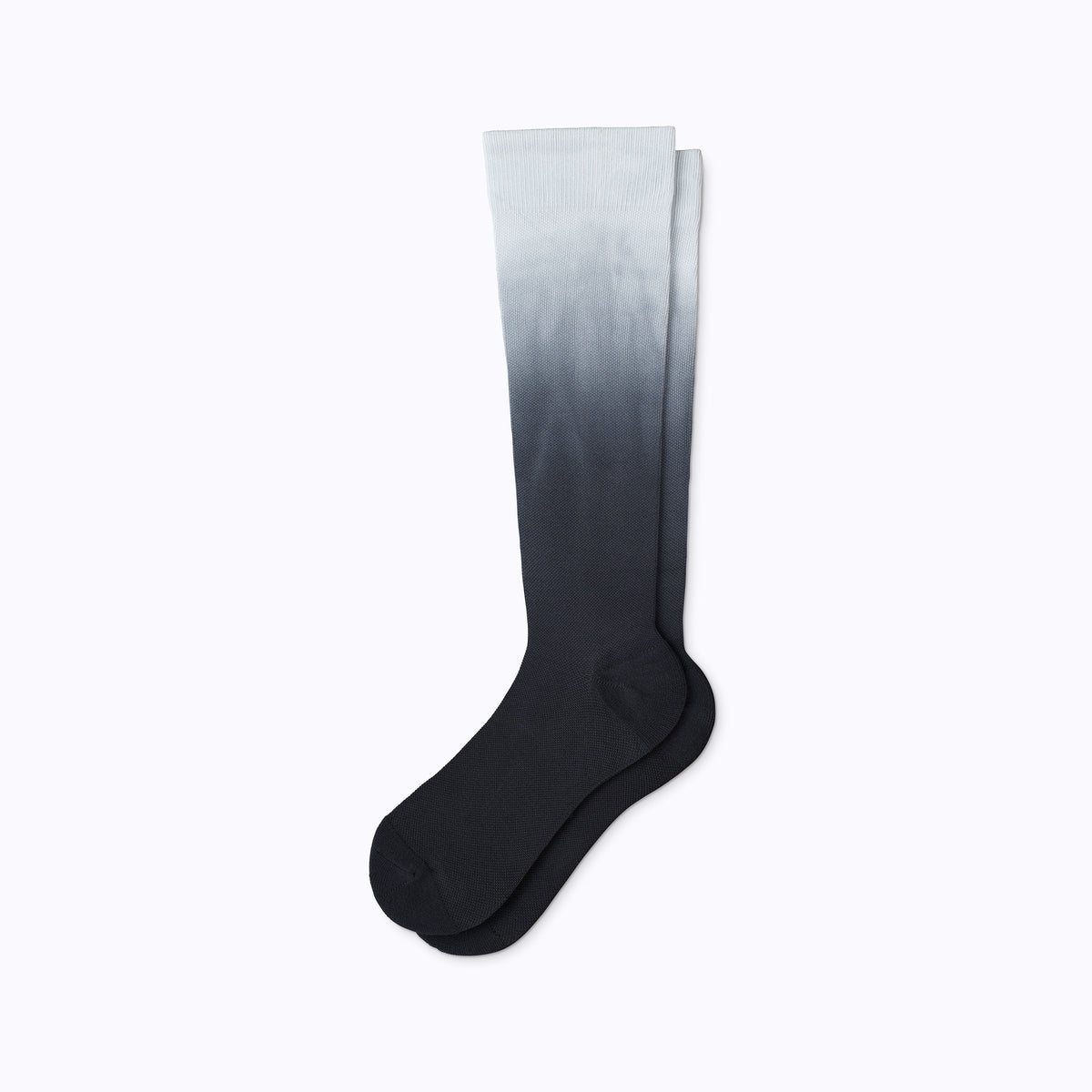
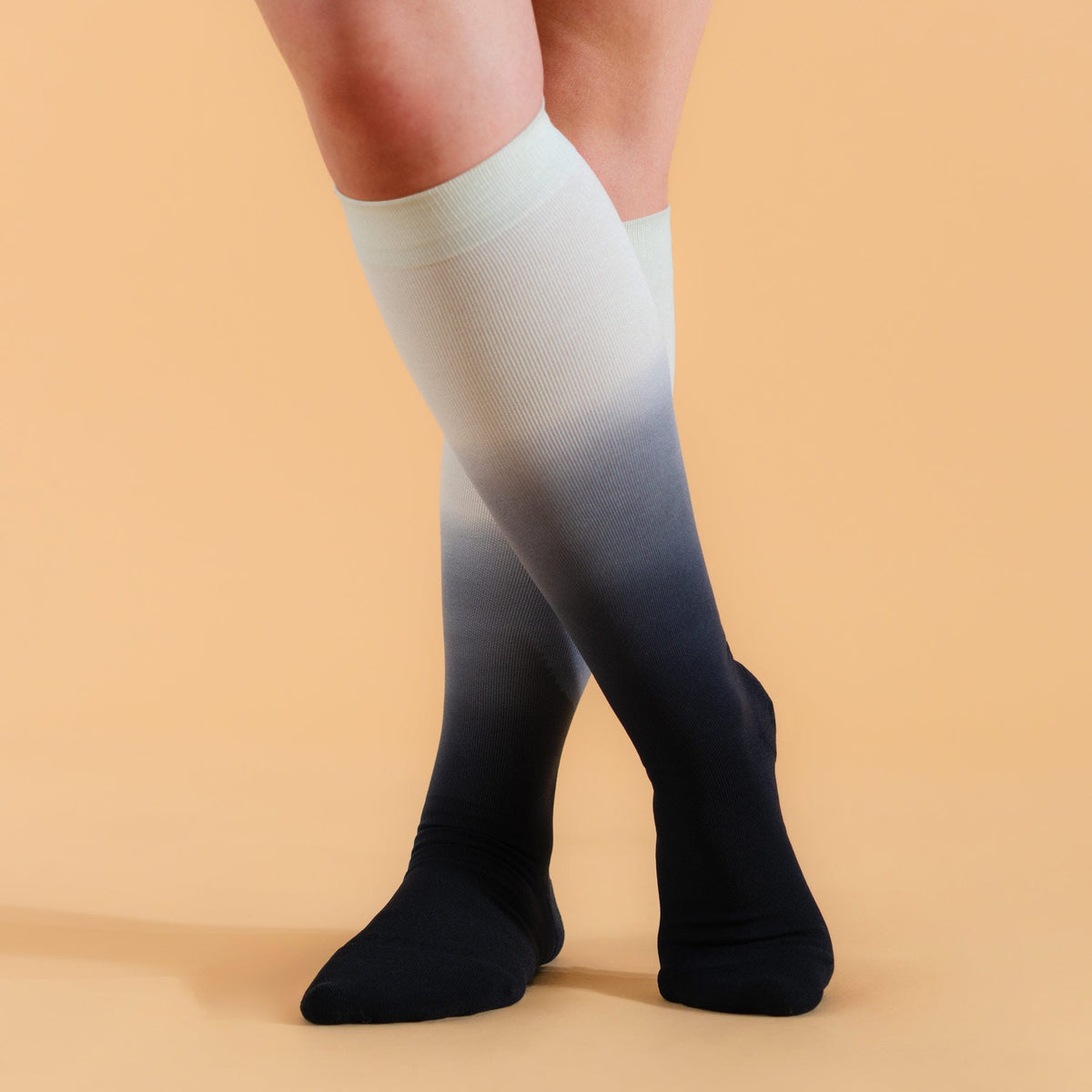


Comrad Knee-High Compression Socks, 15-20 mmHg, Nylon, Ombre
Description
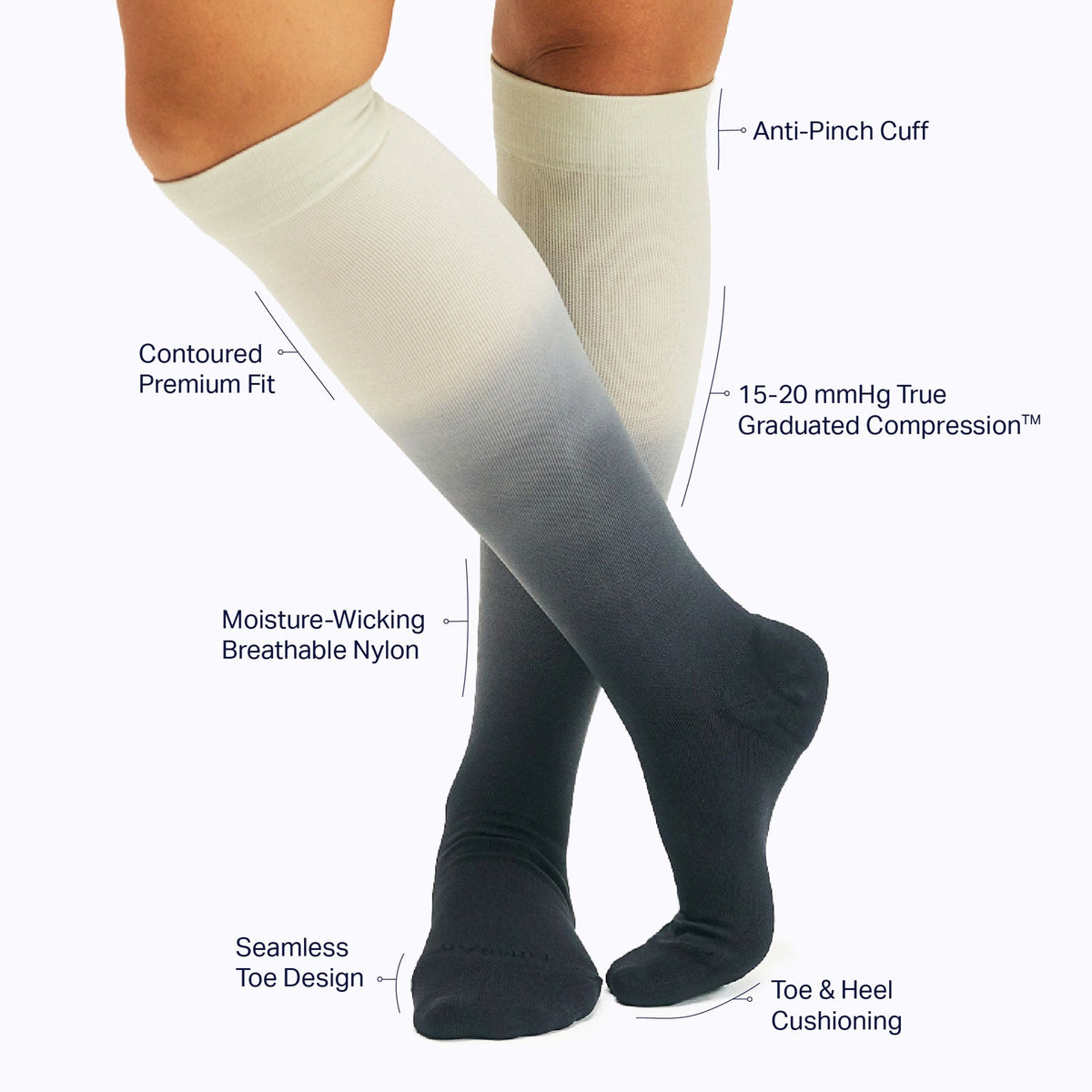
Knee high compression socks in Comrad's Companion style, made from a thin, breathable moisture-wicking nylon that contours to the leg.
True graduated compression at 15-20 mmHg, Comrad's moderate level. Graduated means the pressure is strongest at the ankle and eases as it moves up the leg, supporting circulation during long stretches of sitting or standing.
Smart-Silver antimicrobial ions help control odor, which matters for a sock worn all day.
At 15-20 mmHg this is a moderate, everyday compression level rather than a therapeutic one. If you are managing lymphedema, significant swelling, neuropathy, diabetes, or a circulatory condition, talk with your care team about which compression level is right for you.
Comrad's 15-20 mmHg knee-high compression socks were named Best Compression Socks by New York Times Wirecutter.
Why It Matters
Legs and feet notice. Swelling, heaviness, and aching are common after hours without moving, and the drive or flight to a treatment center adds to it.
Graduated compression is designed for exactly that stretch of stillness. It is also one of the few things you can put on in the morning and then stop thinking about.
Knee high compression socks in Comrad's Companion style, made from a thin, breathable moisture-wicking nylon that contours to the leg.
True graduated compression at 15-20 mmHg, Comrad's moderate level. Graduated means the pressure is strongest at the ankle and eases as it moves up the leg, supporting circulation during long stretches of sitting or standing.
Smart-Silver antimicrobial ions help control odor, which matters for a sock worn all day.
At 15-20 mmHg this is a moderate, everyday compression level rather than a therapeutic one. If you are managing lymphedema, significant swelling, neuropathy, diabetes, or a circulatory condition, talk with your care team about which compression level is right for you.
Comrad's 15-20 mmHg knee-high compression socks were named Best Compression Socks by New York Times Wirecutter.
Blog posts

Intimacy During and After Cancer Treatment
Patients consistently say they want information about sexuality, and consistently report not getting it. Treatment can change desire, comfort, and how you feel in your own body, and the silence around it leaves a lot of people assuming they are the only one.

Living With the What If: Fear After a Cancer Diagnosis
Fear does not end when treatment does. Fear of recurrence is the most commonly reported unmet need in study after study, and almost nobody prepares you for the fact that the worrying gets louder once the appointments stop.

Sleep Problems After Cancer Treatment: Evening Rituals That Help
You can be exhausted all day and still feel wide awake the moment your head touches the pillow. That part can feel especially unfair. Rest does not have to be perfect to count, and winding down still has value on the nights sleep takes its time.


