
100 Questions and Answers About Ovarian Cancer, Dizon and Abu-Rustum
Description
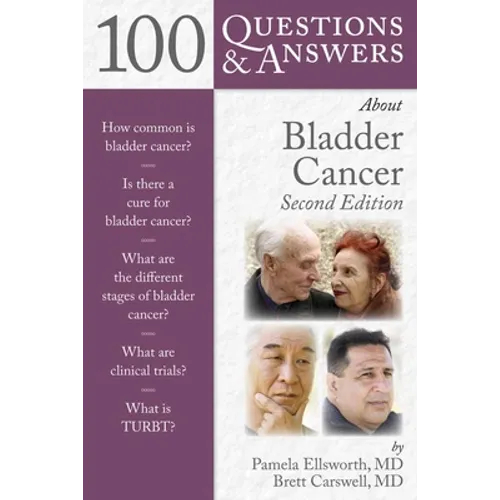
A question and answer guide to bladder cancer by Pamela Ellsworth and Brett Carswell, written by a urologist with commentary from patients throughout. This is the second edition, updated and revised.
The book is organized as 100 questions covering treatment options, quality of life, coping, and where to find support, for patients and for the people close to them. The format means you can look up a single question without reading the book front to back.
Illustrated paperback, 154 pages, 5.9 by 8.9 inches. Published August 2010.
Medical guidance changes over time. Your care team has the most current information for your situation.
Why It Matters
That gap is why references written with patient voices alongside the medical answers are worth seeking out. A physician can explain a procedure accurately and completely and still leave out the thing you most wanted to know, because it never occurred to them that anyone would wonder about it. Someone who has been through it knows exactly which part you are dreading.
It also does something quieter. Reading another person describe the same worry, in the same words you have been using in your head, makes it feel less like a private failing and more like a normal response to an abnormal situation.
A question and answer guide to bladder cancer by Pamela Ellsworth and Brett Carswell, written by a urologist with commentary from patients throughout. This is the second edition, updated and revised.
The book is organized as 100 questions covering treatment options, quality of life, coping, and where to find support, for patients and for the people close to them. The format means you can look up a single question without reading the book front to back.
Illustrated paperback, 154 pages, 5.9 by 8.9 inches. Published August 2010.
Medical guidance changes over time. Your care team has the most current information for your situation.
Blog posts

Intimacy During and After Cancer Treatment
Patients consistently say they want information about sexuality, and consistently report not getting it. Treatment can change desire, comfort, and how you feel in your own body, and the silence around it leaves a lot of people assuming they are the only one.

Living With the What If: Fear After a Cancer Diagnosis
Fear does not end when treatment does. Fear of recurrence is the most commonly reported unmet need in study after study, and almost nobody prepares you for the fact that the worrying gets louder once the appointments stop.

Sleep Problems After Cancer Treatment: Evening Rituals That Help
You can be exhausted all day and still feel wide awake the moment your head touches the pillow. That part can feel especially unfair. Rest does not have to be perfect to count, and winding down still has value on the nights sleep takes its time.


