
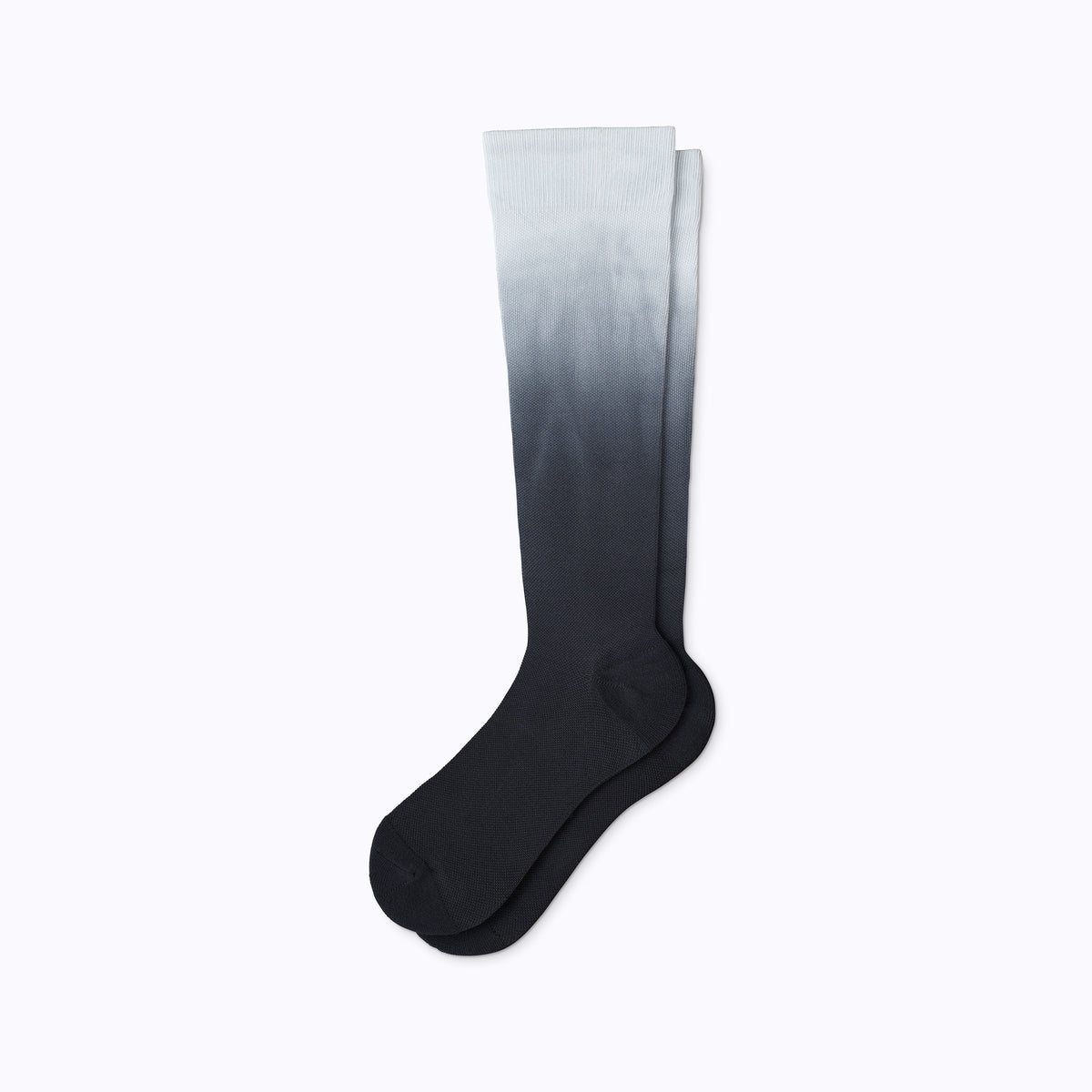
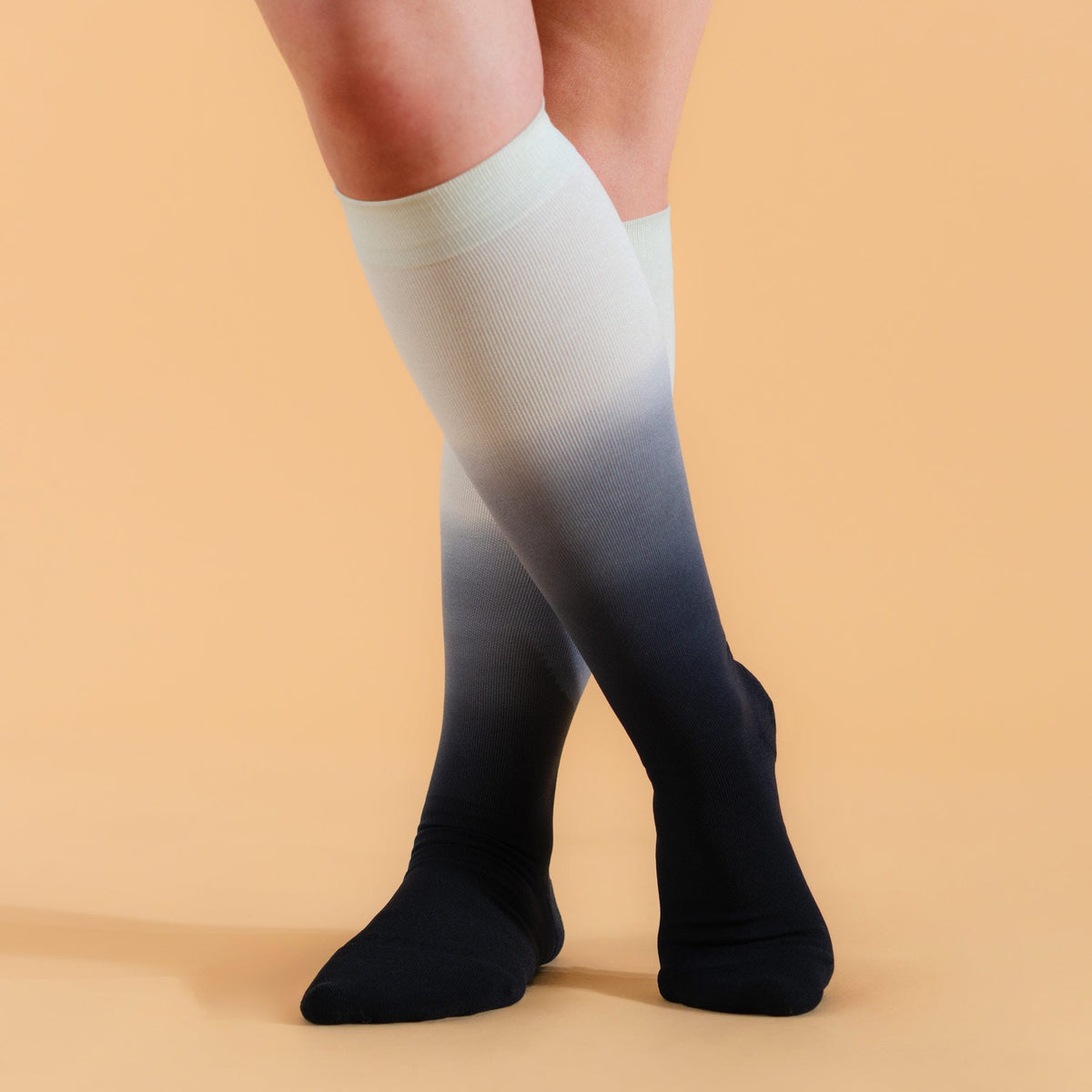


Comrad Knee-High Compression Socks, 15-20 mmHg, Nylon, Ombre
Description
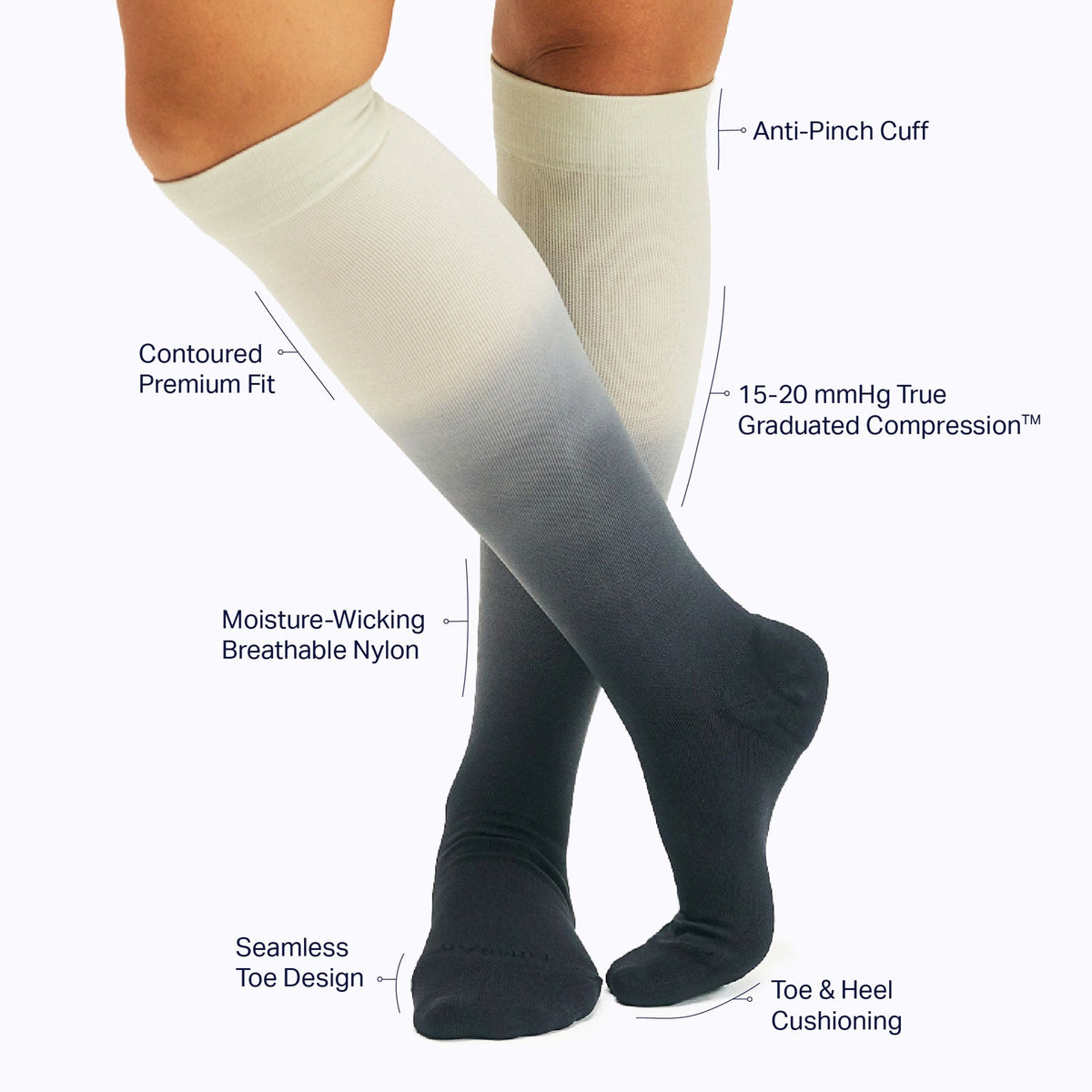
Knee high compression socks in Comrad's Companion style, made from a thin, breathable moisture-wicking nylon that contours to the leg.
True graduated compression at 15-20 mmHg, Comrad's moderate level. Graduated means the pressure is strongest at the ankle and eases as it moves up the leg, supporting circulation during long stretches of sitting or standing.
Smart-Silver antimicrobial ions help control odor, which matters for a sock worn all day.
At 15-20 mmHg this is a moderate, everyday compression level rather than a therapeutic one. If you are managing lymphedema, significant swelling, neuropathy, diabetes, or a circulatory condition, talk with your care team about which compression level is right for you.
Comrad's 15-20 mmHg knee-high compression socks were named Best Compression Socks by New York Times Wirecutter.
Why It Matters
Legs and feet notice. Swelling, heaviness, and aching are common after hours without moving, and the drive or flight to a treatment center adds to it.
Graduated compression is designed for exactly that stretch of stillness. It is also one of the few things you can put on in the morning and then stop thinking about.
Knee high compression socks in Comrad's Companion style, made from a thin, breathable moisture-wicking nylon that contours to the leg.
True graduated compression at 15-20 mmHg, Comrad's moderate level. Graduated means the pressure is strongest at the ankle and eases as it moves up the leg, supporting circulation during long stretches of sitting or standing.
Smart-Silver antimicrobial ions help control odor, which matters for a sock worn all day.
At 15-20 mmHg this is a moderate, everyday compression level rather than a therapeutic one. If you are managing lymphedema, significant swelling, neuropathy, diabetes, or a circulatory condition, talk with your care team about which compression level is right for you.
Comrad's 15-20 mmHg knee-high compression socks were named Best Compression Socks by New York Times Wirecutter.
Blog posts

Easy Foods for Cancer Patients When Nausea Comes and Goes
You might crave toast at 10 a.m., then feel queasy looking at it an hour later. Here are gentle, flexible ways to eat and drink when nausea comes and goes.
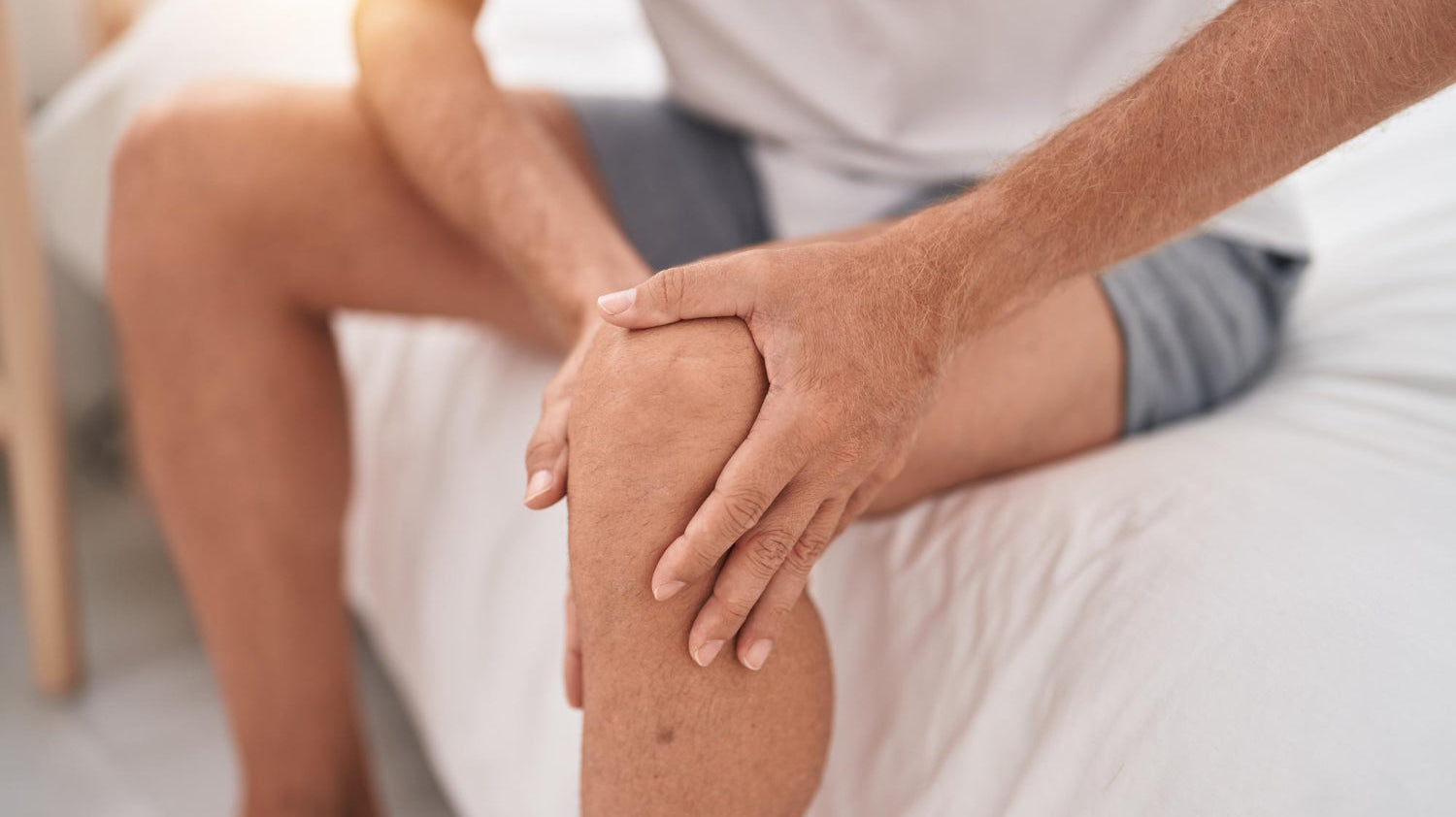
Why Am I So Tired After Cancer Treatment? Fatigue and Joint Pain
You finish treatment and expect energy to return. Instead your body feels heavy and your joints ache. Cancer-related fatigue often lingers well beyond the last appointment, and it does not mean you are doing something wrong.

The Power of Small: Micro-Habits That Make Days Easier
During treatment, advice comes from every direction. Here are small habits that fit the day you are actually living, without turning care into a project.


