







Comrad Knee-High Compression Socks, 20-30 mmHg Firm Support, Stripes
Description
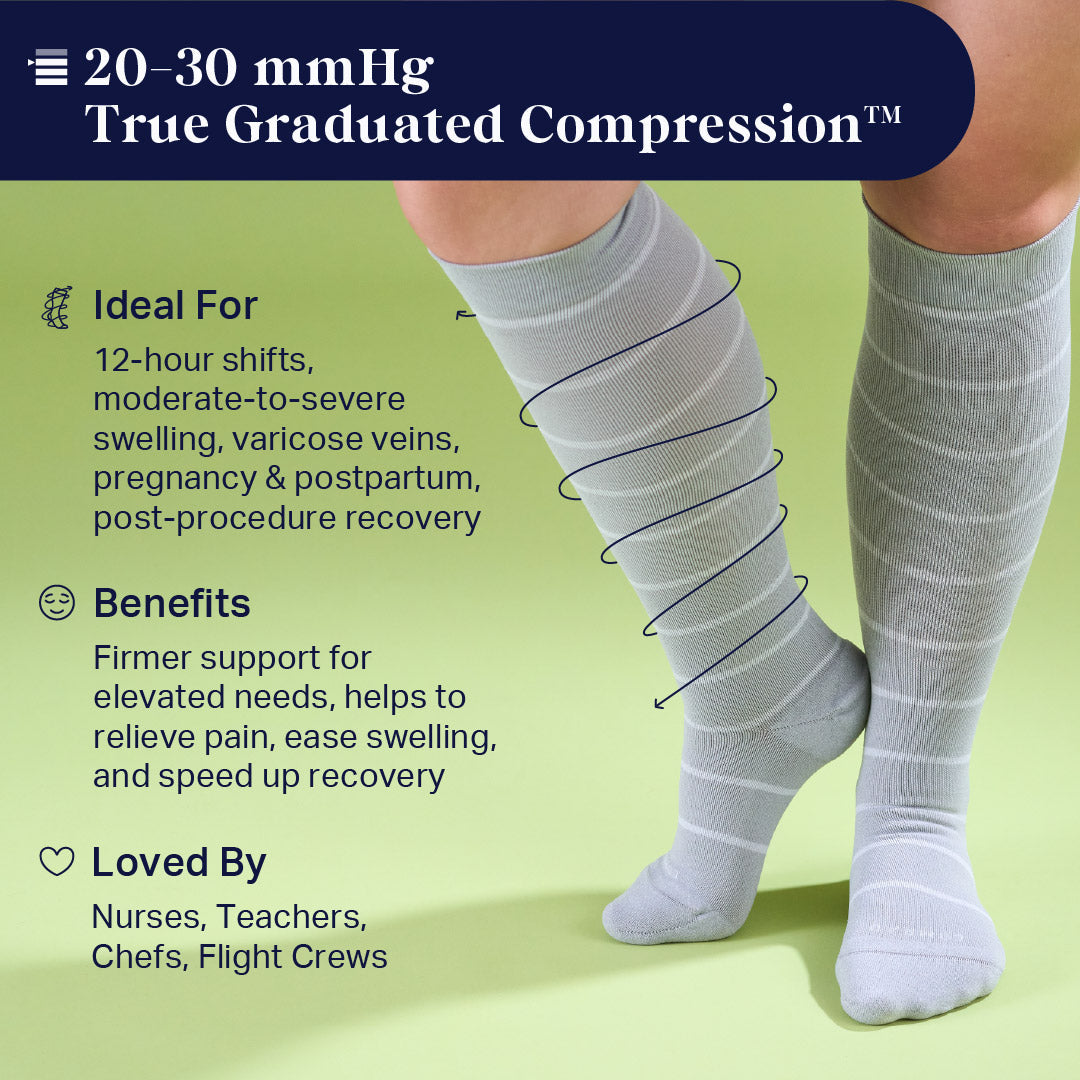
Knee high compression socks in Comrad's Companion style, made from a thin, breathable moisture-wicking nylon that contours to the leg.
True graduated compression at 20-30 mmHg, Comrad's firm level. The pressure is strongest at the ankle and eases as it moves up the leg. Comrad lists this level as commonly used for moderate to severe swelling and pain, circulatory conditions, and recovery.
Smart-Silver antimicrobial ions help control odor.
Comrad recommends talking with a healthcare provider before using 20-30 mmHg compression.
Why It Matters
Legs and feet notice. Swelling, heaviness, and aching are common after hours without moving, and the drive or flight to a treatment center adds to it.
Graduated compression is designed for exactly that stretch of stillness. Which level suits you is worth a conversation with your care team, since the right one depends on what is causing the swelling.
Knee high compression socks in Comrad's Companion style, made from a thin, breathable moisture-wicking nylon that contours to the leg.
True graduated compression at 20-30 mmHg, Comrad's firm level. The pressure is strongest at the ankle and eases as it moves up the leg. Comrad lists this level as commonly used for moderate to severe swelling and pain, circulatory conditions, and recovery.
Smart-Silver antimicrobial ions help control odor.
Comrad recommends talking with a healthcare provider before using 20-30 mmHg compression.
Blog posts

When People Disappear: Friendship and Isolation During Cancer
Some of the people you expected to show up will not. Others you barely knew will turn out to be extraordinary. Almost nobody warns you that a diagnosis rearranges your relationships, and that the sorting can hurt as much as the treatment.

Caring for Someone With Cancer Without Disappearing Yourself
Every caregiver says a version of the same sentence: I am fine, it is not about me. They mean it. It is also not true, and it is not sustainable. The household is running on you, and that deserves attention too.

Chemo Brain Is Real: Living With Cognitive Changes During Treatment
You walk into a room and cannot remember why. A word you have used your whole life is suddenly gone. Cognitive changes during and after treatment are common and recognized, and being unable to point to them on a scan does not make them imaginary.


