
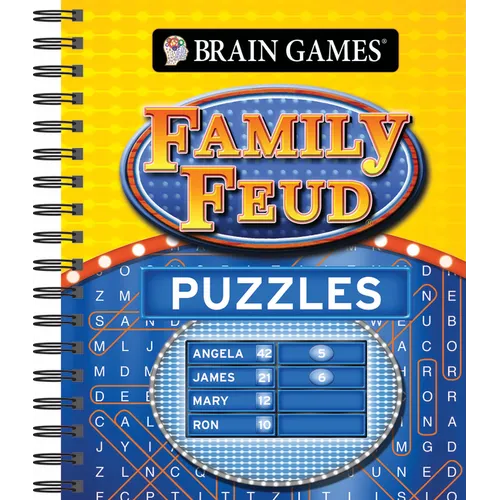
Brain Games Family Feud Word Search, 70 Puzzles, Spiral Bound
Description
A word search book built around the television game show Family Feud, with 70 puzzles.
Each puzzle starts with a classic survey question covering topics like food, love, animals, and everyday life. You guess up to eight survey answers, then find them in the grid, which makes it part word search and part recall game rather than a straight letter hunt.
Spiral binding means the book lies flat and stays open at the page you are on.
Answer key at the back. 160 pages, 7.8 by 9.13 inches. Published January 2020.
Why It Matters
Simple brain games provide a low-pressure way to stay mentally active and engaged. They help support cognitive function while also giving structure to quiet time—whether you’re at home, in a waiting room, or spending time with others.
A word search book built around the television game show Family Feud, with 70 puzzles.
Each puzzle starts with a classic survey question covering topics like food, love, animals, and everyday life. You guess up to eight survey answers, then find them in the grid, which makes it part word search and part recall game rather than a straight letter hunt.
Spiral binding means the book lies flat and stays open at the page you are on.
Answer key at the back. 160 pages, 7.8 by 9.13 inches. Published January 2020.
Blog posts

When People Disappear: Friendship and Isolation During Cancer
Some of the people you expected to show up will not. Others you barely knew will turn out to be extraordinary. Almost nobody warns you that a diagnosis rearranges your relationships, and that the sorting can hurt as much as the treatment.

Caring for Someone With Cancer Without Disappearing Yourself
Every caregiver says a version of the same sentence: I am fine, it is not about me. They mean it. It is also not true, and it is not sustainable. The household is running on you, and that deserves attention too.

Chemo Brain Is Real: Living With Cognitive Changes During Treatment
You walk into a room and cannot remember why. A word you have used your whole life is suddenly gone. Cognitive changes during and after treatment are common and recognized, and being unable to point to them on a scan does not make them imaginary.


