
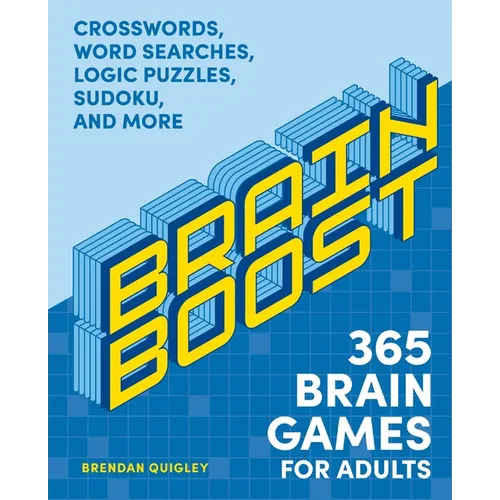
Brain Boost 365 Large Print Puzzles by Brendan Quigley, Paperback
Description
A large print puzzle collection with 365 puzzles, one for each day of the year, by crossword constructor Brendan Quigley.
The mix includes crosswords, sudoku, word searches, cryptograms, brain teasers, and logic puzzles, across multiple difficulty levels from beginner through experienced. That variety means you can pick a type to suit the day rather than working through one format throughout.
Printed in large print for comfortable solving, and suitable for both short breaks and longer sessions.
Paperback, 240 pages, 7.3 by 8.9 inches. Published October 2025.
Why It Matters
Simple brain games provide a low-pressure way to stay mentally active and engaged. They help support cognitive function while also giving structure to quiet time—whether you’re at home, in a waiting room, or spending time with others.
A large print puzzle collection with 365 puzzles, one for each day of the year, by crossword constructor Brendan Quigley.
The mix includes crosswords, sudoku, word searches, cryptograms, brain teasers, and logic puzzles, across multiple difficulty levels from beginner through experienced. That variety means you can pick a type to suit the day rather than working through one format throughout.
Printed in large print for comfortable solving, and suitable for both short breaks and longer sessions.
Paperback, 240 pages, 7.3 by 8.9 inches. Published October 2025.
Blog posts

When People Disappear: Friendship and Isolation During Cancer
Some of the people you expected to show up will not. Others you barely knew will turn out to be extraordinary. Almost nobody warns you that a diagnosis rearranges your relationships, and that the sorting can hurt as much as the treatment.

Caring for Someone With Cancer Without Disappearing Yourself
Every caregiver says a version of the same sentence: I am fine, it is not about me. They mean it. It is also not true, and it is not sustainable. The household is running on you, and that deserves attention too.

Chemo Brain Is Real: Living With Cognitive Changes During Treatment
You walk into a room and cannot remember why. A word you have used your whole life is suddenly gone. Cognitive changes during and after treatment are common and recognized, and being unable to point to them on a scan does not make them imaginary.


